Blog / Nutrition Science
Microgreens Nutrition: Why They're So Nutrient-Dense
This article is for general education only and is not medical advice. Talk with your doctor before making changes to your diet, especially if you have a health condition or take medication.
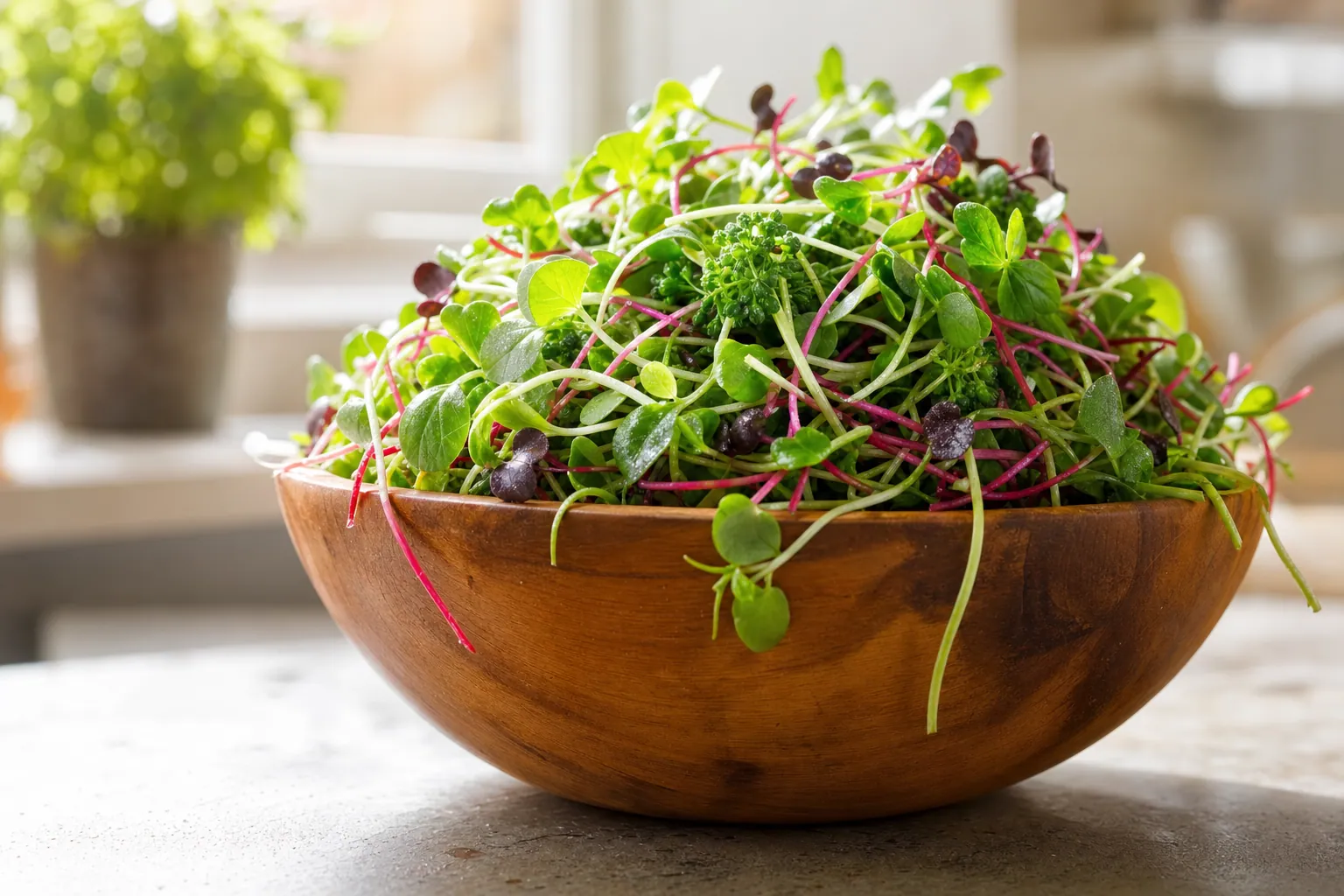
When it comes to microgreens nutrition, the headline is simple: these tiny seedlings, harvested just a week or two after sprouting, often deliver far more vitamins, minerals, and antioxidants per bite than the full-grown vegetables they would have become. They look delicate, almost decorative. But gram for gram, a good microgreen is one of the most concentrated fresh foods you can put on a plate.
That density isn’t marketing. Peer-reviewed reviews in journals like MDPI Plants, along with USDA-supported research, have repeatedly found that many microgreens carry meaningfully higher levels of certain nutrients than their mature counterparts. Below, we’ll look at what’s actually inside these greens, which varieties stand out, why heat and freshness change the math, and how to get the most out of every harvest.
What Makes Microgreens So Nutrient-Dense
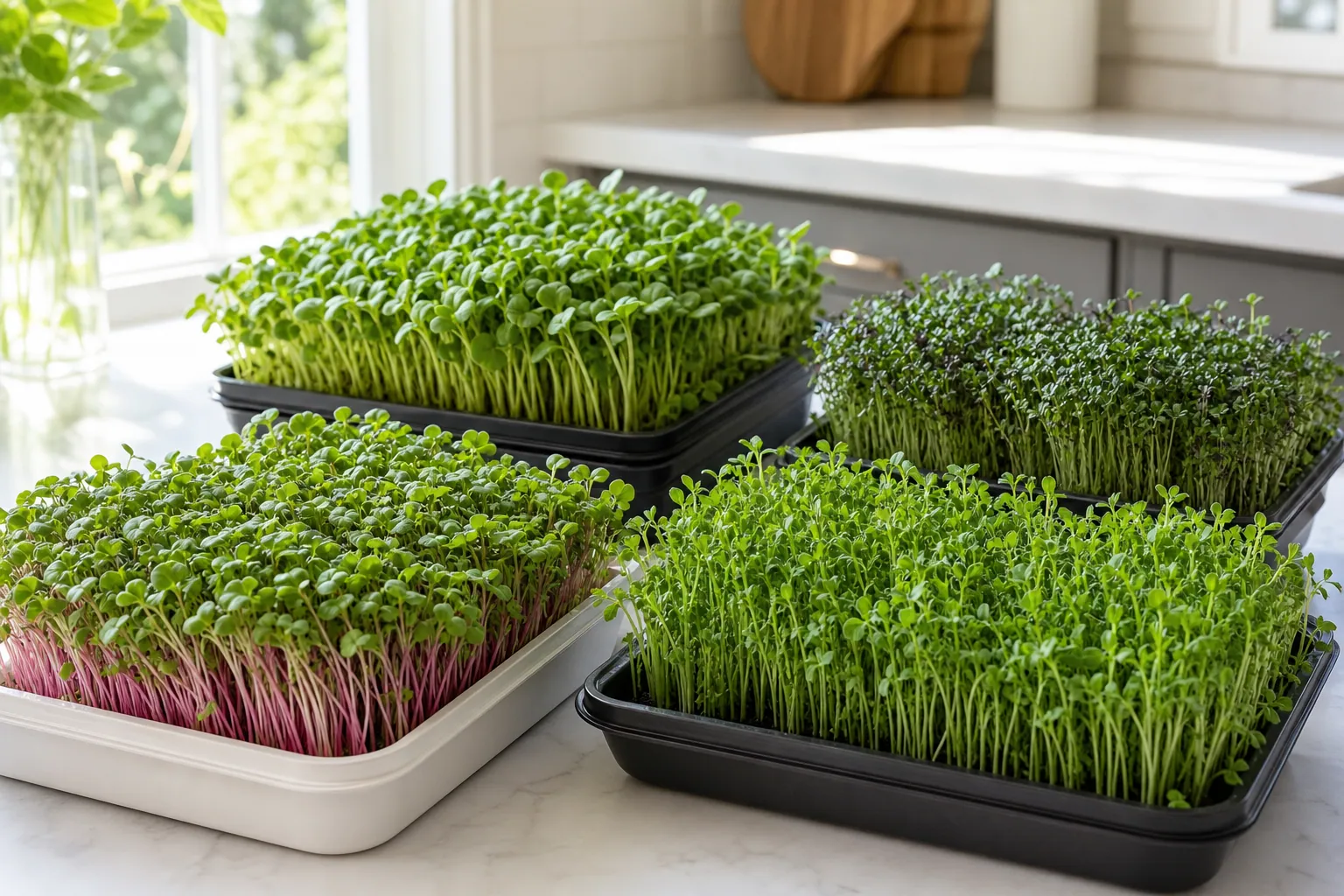
A microgreen is a vegetable harvested at the seedling stage, usually just after the first true leaves appear — roughly 7 to 14 days from seed, depending on the crop. Don’t confuse this with a sprout: a sprout is eaten seed, root, and all, germinated in water over a few days, while a microgreen is grown in light, develops leaves, and is snipped above the line. That difference matters for both safety and nutrition, and we break it down in microgreens vs. sprouts.
At the seedling stage the plant is running on a concentrated burst of stored energy and is actively building the enzymes, pigments, and protective compounds it needs to grow. You’re essentially eating the plant at its most metabolically active moment, before that energy gets diluted across a much larger, more watery mature vegetable.
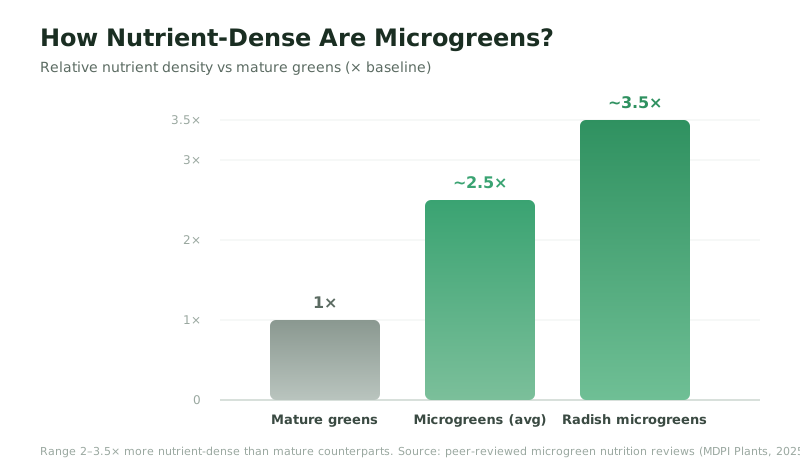
Across many studies, microgreens come in around 2 to 3.5 times more nutrient-dense than their mature versions, with radish microgreens frequently landing at the high end. The advantage tends to show up across a range of nutrients rather than a single one, which is part of what makes them interesting nutritionally.
Microgreens are particularly rich in:
- Vitamin C — supports immune function and collagen synthesis
- Vitamin K — important for blood clotting and bone health
- Vitamin E — a fat-soluble antioxidant that protects cell membranes
- Polyphenols and antioxidants — plant compounds linked to cellular defense
Here’s how a few popular varieties compare on their standout traits:
| Microgreen | Standout nutrient/trait | Notable detail |
|---|---|---|
| Radish | Among the most nutrient-dense | Often highest in density studies |
| Broccoli | Sulforaphane precursor | ~10-100x more than mature broccoli |
| Pea shoots | Plant protein | Up to ~35% protein by weight |
| Red cabbage | Antioxidants/polyphenols | Studied in early cholesterol research |
| Sunflower | Vitamin E, healthy fats | Mild, nutty, beginner-friendly |
It’s worth being honest about one limit: these are relative comparisons by weight. A handful of microgreens is light, so you won’t out-eat a full plate of broccoli on total volume. The point isn’t to replace mature vegetables — it’s that a small, easy-to-add garnish can punch well above its size. If you’re newer to the topic, our overview of what are microgreens is a helpful starting point, and are microgreens good for you weighs the evidence in plain terms.
The Standout Compounds Worth Knowing
Some microgreens earn their reputation not just for vitamins, but for specific, well-studied plant compounds. Three crops in particular keep coming up in the research.
Broccoli microgreens and sulforaphane
Broccoli microgreens are the headliner. Research from Johns Hopkins found that young broccoli sprouts and microgreens can contain roughly 10 to 100 times more of the sulforaphane precursor (glucoraphanin) than mature broccoli. Broccoli microgreens have been reported to hold around 633 mg of total sulforaphane per 100g of fresh weight — a striking figure for such a small leaf.
So what is sulforaphane? It’s an isothiocyanate that forms when the compound glucoraphanin meets an enzyme called myrosinase — a reaction triggered when you chew or chop the plant. The two are stored in separate compartments in the leaf and only meet when the tissue is broken. Once formed, sulforaphane activates the body’s Nrf2 pathway, which acts like a master switch for antioxidant and detoxification responses inside cells.
Researchers have studied sulforaphane in connection with blood-sugar regulation, inflammation, and cellular defense. Importantly, this is research-stage science, not proof of any cure, and much of it comes from cell or animal models. There’s a deeper dive in our piece on what is sulforaphane if you want the full picture, plus practical tips in maximize sulforaphane.
One practical note that surprises people: heat degrades myrosinase, the enzyme that makes sulforaphane formation possible. Overcooking — boiling or hard sautéing — can blunt the benefit by deactivating the enzyme before the reaction happens. Eating broccoli microgreens raw, fresh, and well-chewed tends to preserve the most active compound.
Pea shoots for plant protein
Pea shoots are a quiet powerhouse for anyone leaning into plant-based eating. They can reach up to about 35% protein by weight, making them a genuinely strong plant protein source for their size, alongside fiber and vitamin C. Tossed into a salad, folded into a wrap, or stirred into a warm bowl off the heat, they add substance and a fresh, sweet snap without much bulk. See more in our roundup of high-protein microgreens.
Red cabbage microgreens and early cholesterol research
Red cabbage microgreens have drawn interest for their deep antioxidant content, driven largely by anthocyanins — the same purple-red pigments studied in berries. In one USDA animal study, mice fed red cabbage microgreens showed LDL (“bad”) cholesterol reduced by roughly 34%, along with reduced weight gain and lower inflammatory markers.
This is encouraging, but it’s worth being precise: that was an animal (mouse) study, not human proof. Mice metabolize food differently, and doses in lab diets rarely map cleanly onto a sprinkle on your salad. It points to a direction worth researching, not a guaranteed outcome on your plate. We cover the nuance in microgreens and cholesterol.
How to Actually Get the Nutrition
The best microgreen nutrition profile in the world doesn’t help if the greens wilt before you eat them — or if cooking destroys the compounds you wanted. A few simple habits make a real difference.
Eat them fresh and raw when possible. Many of the most valuable compounds, especially sulforaphane and vitamin C, are most available in raw, recently harvested greens. Vitamin C in particular fades steadily after harvest, so freshness genuinely matters.
Chew well. Sulforaphane forms during the act of chewing and chopping, when myrosinase finally meets glucoraphanin. Slowing down actually helps the chemistry work in your favor.
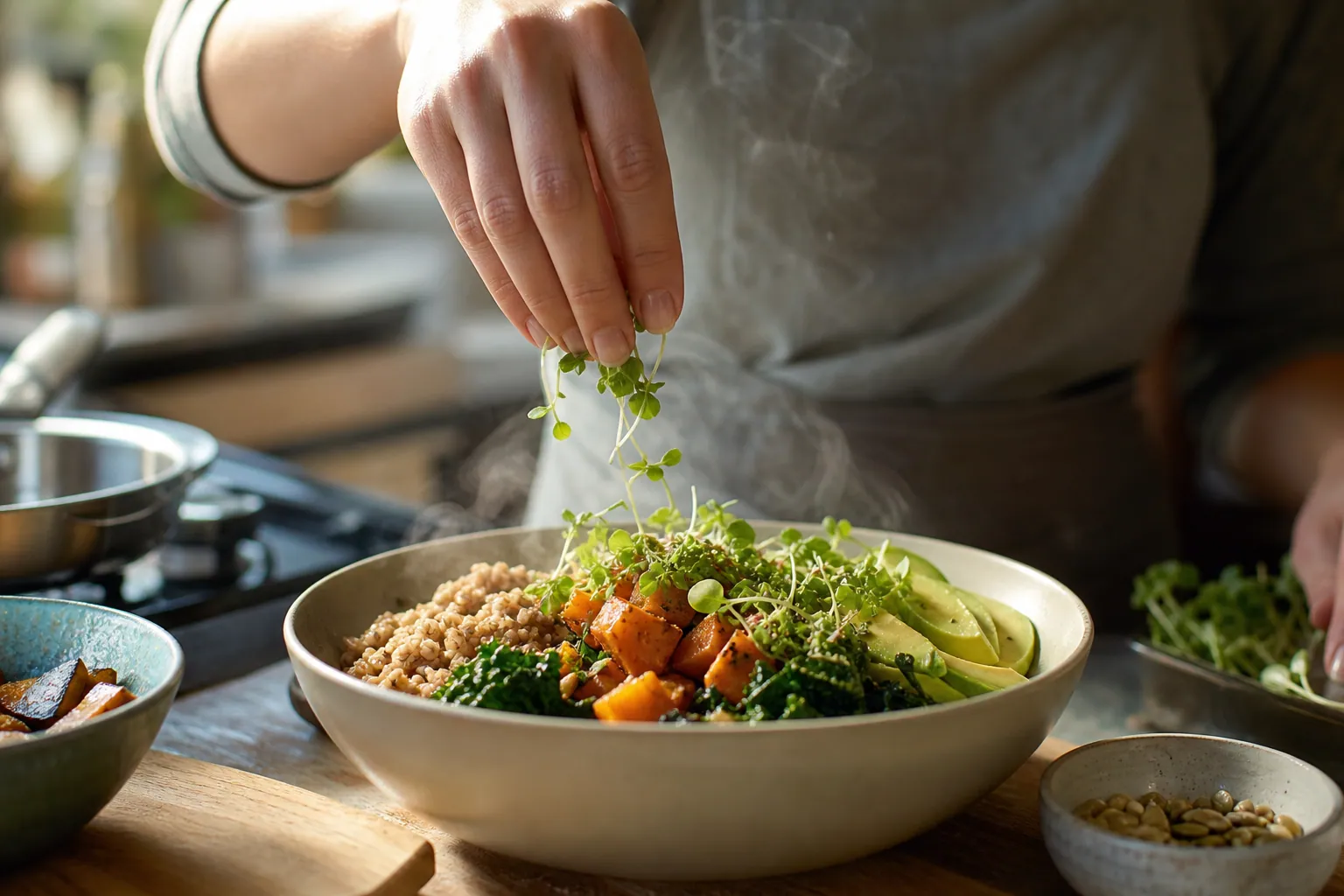
Add them at the end. Stir microgreens into warm dishes off the heat, or scatter them on top of eggs, soups, and grain bowls, rather than cooking them down.
| Goal | Best move |
|---|---|
| Maximum sulforaphane | Broccoli microgreens, raw, well-chewed |
| More plant protein | Pea shoots in salads or wraps |
| Everyday antioxidants | A mixed handful daily, fresh |
| Easy first crop | Radish (germinates 1-2 days, harvest 5-7) |
For ideas beyond a basic garnish, our guide to how to eat microgreens covers simple, practical ways to fold them into meals you already make.
The catch with nutrition this fragile is freshness. Store-bought microgreens often spend days traveling from farm to truck to warehouse to store shelf before they reach you, and they wilt fast once home — which is part of why a $4-6 clamshell can feel like a poor deal. Growing your own, or using a system that keeps the greens alive until you harvest, is the most reliable way to eat them at their nutritional peak.
A Tiny Green With a Real Payoff
Microgreens nutrition isn’t hype. These small leaves concentrate vitamins, antioxidants, and well-studied compounds into a form that’s easy to add to almost any meal. The science is genuine, even where it’s still early — and the simplest way to benefit is to eat them often, fresh, and raw.
That’s exactly the problem Luya was built to solve. Our countertop grower keeps microgreens alive and growing right on your counter, so you harvest only what you need, seconds before eating — no wilting, no waste, no daily fuss. See how it works, and if you’re curious which crop to try first, start with easiest microgreens to grow.
Selected sources
- Johns Hopkins Medicine — research on broccoli sprouts and sulforaphane (hopkinsmedicine.org)
- USDA — Agricultural Research Service studies on microgreens (usda.gov)
- MDPI Plants — peer-reviewed reviews of microgreen nutrient density (mdpi.com)
- National Institutes of Health / PMC — sulforaphane and Nrf2 pathway research (pubmed.ncbi.nlm.nih.gov)
- Cleveland Clinic — general nutrition guidance (clevelandclinic.org)
- Healthline — consumer health overviews (healthline.com)
Grow fresh greens at home
Get new microgreens guides + Luya updates. No spam.