Blog / Basics
What Are Microgreens? A Complete Beginner’s Guide
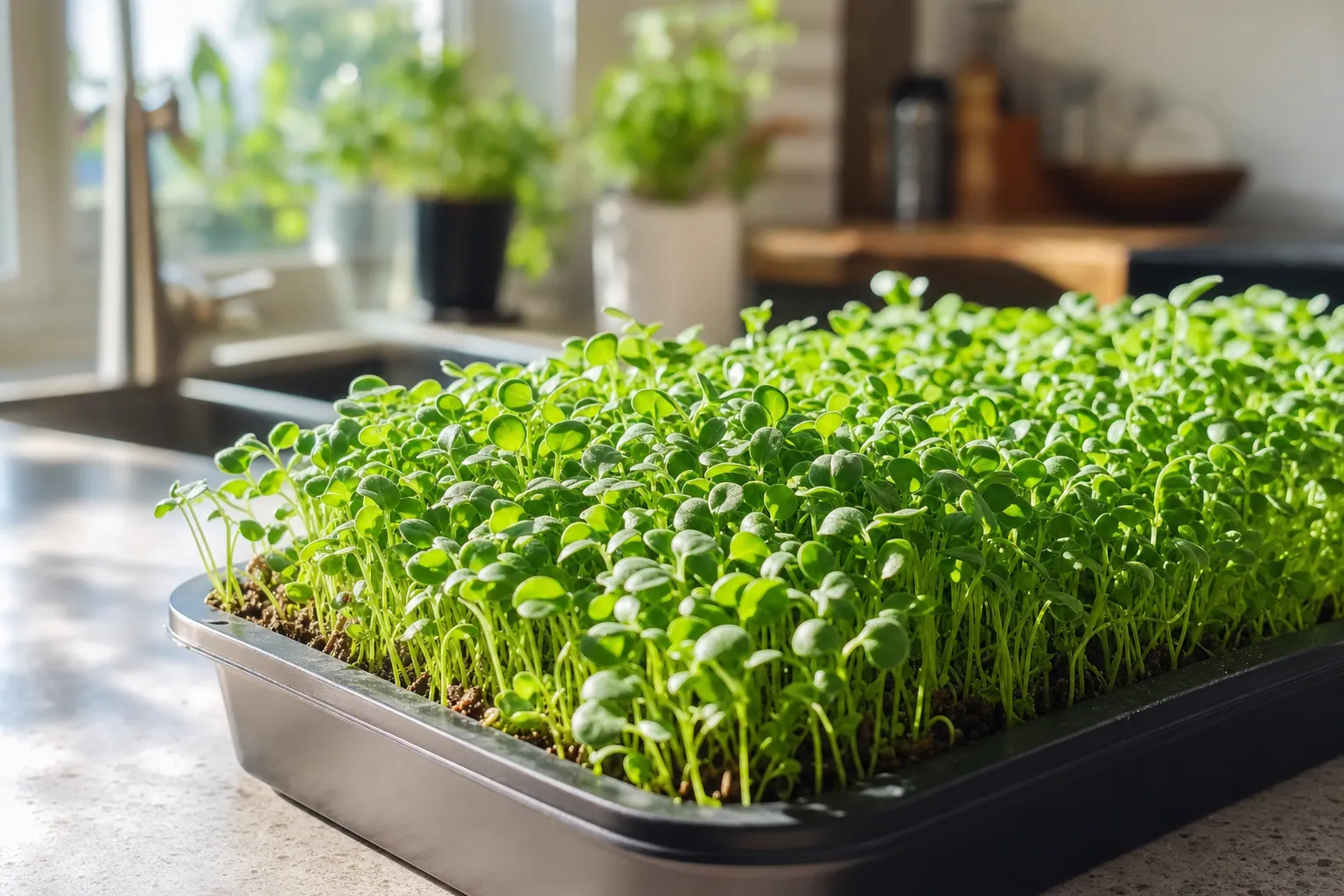
If you have ever walked past a $5 clamshell of tiny green shoots at the grocery store and wondered what the fuss was about, this guide is for you. So, what are microgreens? In plain terms, they are young, edible vegetable and herb seedlings harvested just after their first true leaves appear, usually 7 to 14 days after planting. They sit between a sprout and a baby green, and despite their small size, they carry a surprising amount of nutrition, color, and flavor for their weight.
Microgreens started out as a high-end restaurant garnish in the 1980s and have since become a staple in health-focused home kitchens. They are flavorful, they grow fast in almost no space, and they are often far more nutrient-dense than the full-grown versions of the same plants. Below, we will cover exactly what they are, why people eat them, how to use them, and what it actually takes to grow them yourself.
What Are Microgreens, Exactly?
A microgreen is the early seedling stage of a vegetable, herb, or grain. You sow the seeds densely on a growing medium, give them light and water, and harvest by snipping the stems just above the soil line once the first set of true leaves has formed. You eat the stem and leaves; the seed hull and root stay behind.
The most useful way to understand a microgreen is to place it next to its relatives on the growth timeline:
| Stage | Age at harvest | What you eat | Grown in |
|---|---|---|---|
| Sprout | 2–5 days | Whole seed, root, shoot | Water only (no soil or light) |
| Microgreen | 7–14 days | Stem and leaves (snipped) | Soil or growing medium, with light |
| Baby green | 3–4 weeks | Leaves | Soil, with light |
| Mature vegetable | 6+ weeks | Full plant | Soil, with light |
The key difference from a sprout is light: microgreens are grown in light and harvested above the medium, so you skip the soggy seed hull and root that sprouts are eaten with. That also matters for food safety, since the warm, wet, dark conditions sprouts need can encourage bacteria. If you want a deeper side-by-side, see our guide on microgreens vs sprouts.
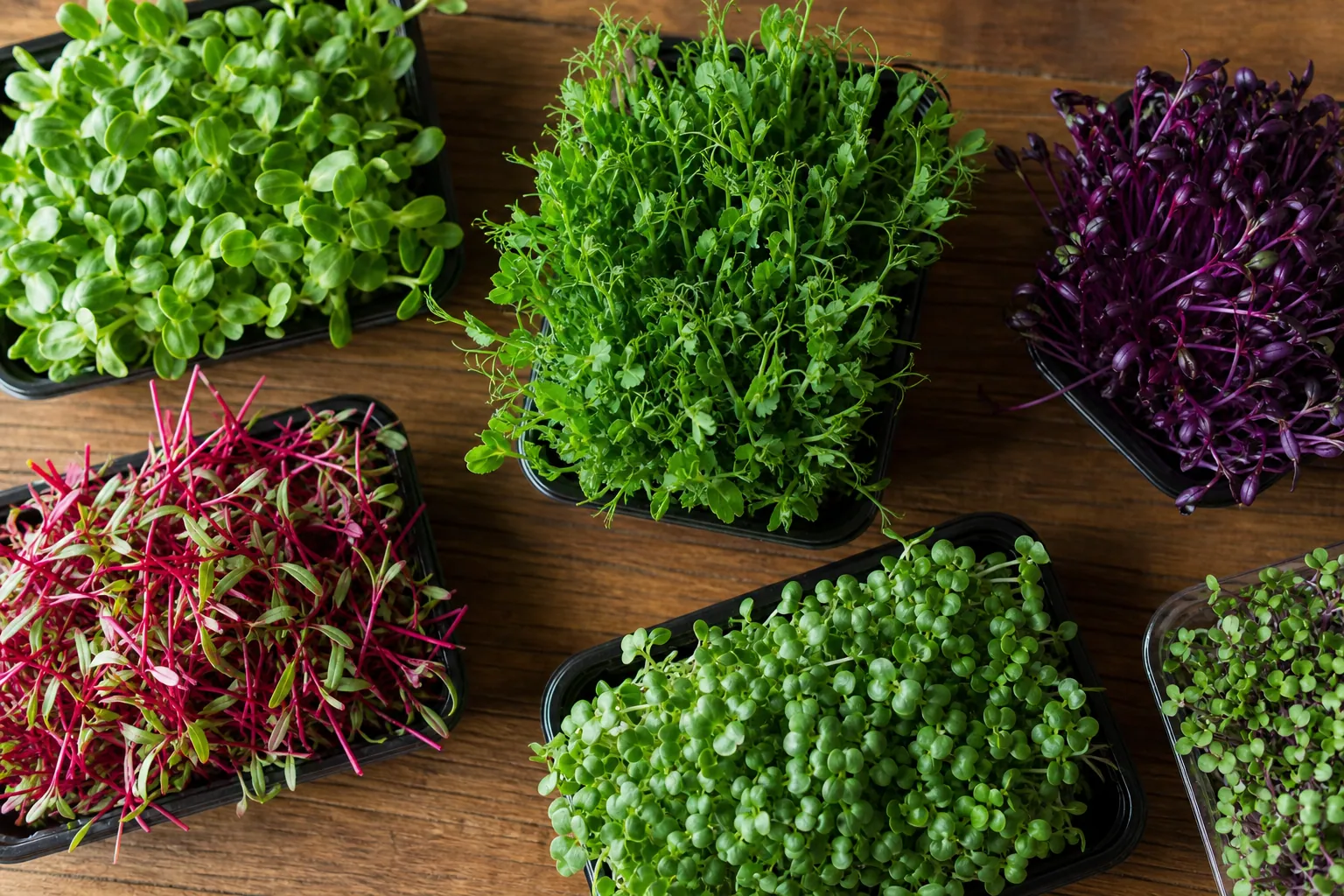
Common varieties include radish, broccoli, pea, sunflower, kale, and red cabbage, and each brings a distinct flavor, from the sharp peppery bite of radish microgreens to the mild, fresh sweetness of pea shoots.
Why Are Microgreens So Nutritious?
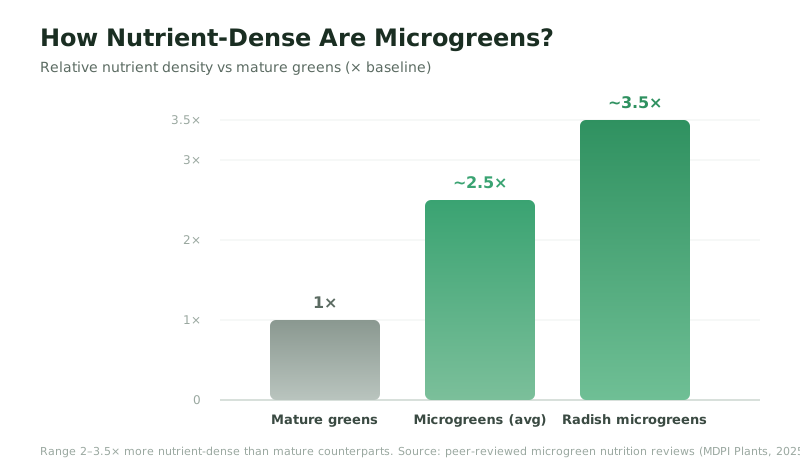
This is where microgreens earn their reputation. Research summarized in peer-reviewed reviews (such as those published in MDPI’s Plants) and USDA data suggests microgreens are roughly 2 to 3.5 times more nutrient-dense than their mature counterparts, with radish microgreens often topping the list. The reason is biological: a seed packs everything a plant needs to launch into life, and the seedling concentrates that energy, along with vitamins and antioxidants, into a few centimeters of tissue before the plant spreads thin into a full-size vegetable.
Across varieties, microgreens are typically rich in vitamins C, K, and E, plus carotenoids and polyphenols, the plant antioxidants linked to cellular defense.
A few standouts deserve a closer look:
- Broccoli microgreens are famous for sulforaphane, an isothiocyanate that forms when the compound glucoraphanin meets the enzyme myrosinase as you chew or chop. Sulforaphane activates the body’s Nrf2 pathway, which switches on antioxidant and detox defenses, and it is being studied for blood-sugar regulation and inflammation (research-stage, not a proven cure). Johns Hopkins research found broccoli microgreens and sprouts can contain roughly 10 to 100 times more of the sulforaphane precursor than mature broccoli, with broccoli microgreens reported at about 633 mg of total sulforaphane per 100g fresh. To go deeper, read what is sulforaphane.
- Pea shoots are a genuinely strong plant-based protein source, with protein content reaching up to about 35% by weight, which makes them a favorite among anyone eating a vegan diet.
- Red cabbage microgreens were the focus of an animal (mouse) study cited by the USDA in which LDL cholesterol dropped about 34%, alongside reduced weight gain and lower inflammatory markers. This is early, animal-stage research rather than proof in humans, but it is exactly the kind of result that keeps scientists studying these little greens.
For the full nutritional picture across varieties, our microgreens nutrition guide breaks it down crop by crop.
How Do You Eat Microgreens?
One of the best things about microgreens is that you eat them raw, which preserves their delicate, heat-sensitive nutrients. Their small size means they fold into food you already make without changing the recipe. They work well as:
- A finishing garnish on avocado toast, soups, fried eggs, or pizza
- A fresh, crunchy layer in sandwiches and wraps
- A handful tossed into salads
- A nutrient boost blended into smoothies
Here is a tip rooted in the science: for crops like broccoli, sulforaphane only forms once the cells are broken, so chewing or chopping matters, and high heat degrades the myrosinase enzyme that makes the reaction possible. The practical rule is simple, eat them raw, fresh, and well-chewed to get the most out of them. Stir a handful into a warm dish at the very end rather than cooking them in.
How to Grow Microgreens at Home
Here is the appeal: microgreens grow fast, need very little space, and do not require a garden, a yard, or much equipment. For beginners, some crops are far more forgiving than others, and starting with the reliable ones builds confidence.
| Crop | Germination | Harvest | Why it’s beginner-friendly |
|---|---|---|---|
| Radish | 1–2 days | 5–7 days | Fastest, very reliable |
| Pea shoots | 2–3 days | 8–12 days | Forgiving, high protein |
| Broccoli | 2–3 days | 8–12 days | Nutrient powerhouse |
| Sunflower | 2–3 days | 8–12 days | Crunchy, high yield |
The basic method is straightforward: spread seeds densely across a moist growing medium, keep them covered and dark for a few days so they germinate evenly, then move the tray into bright light and water gently each day until harvest. Snip at the base, rinse, and eat. Our easiest microgreens to grow guide walks through each step in detail.
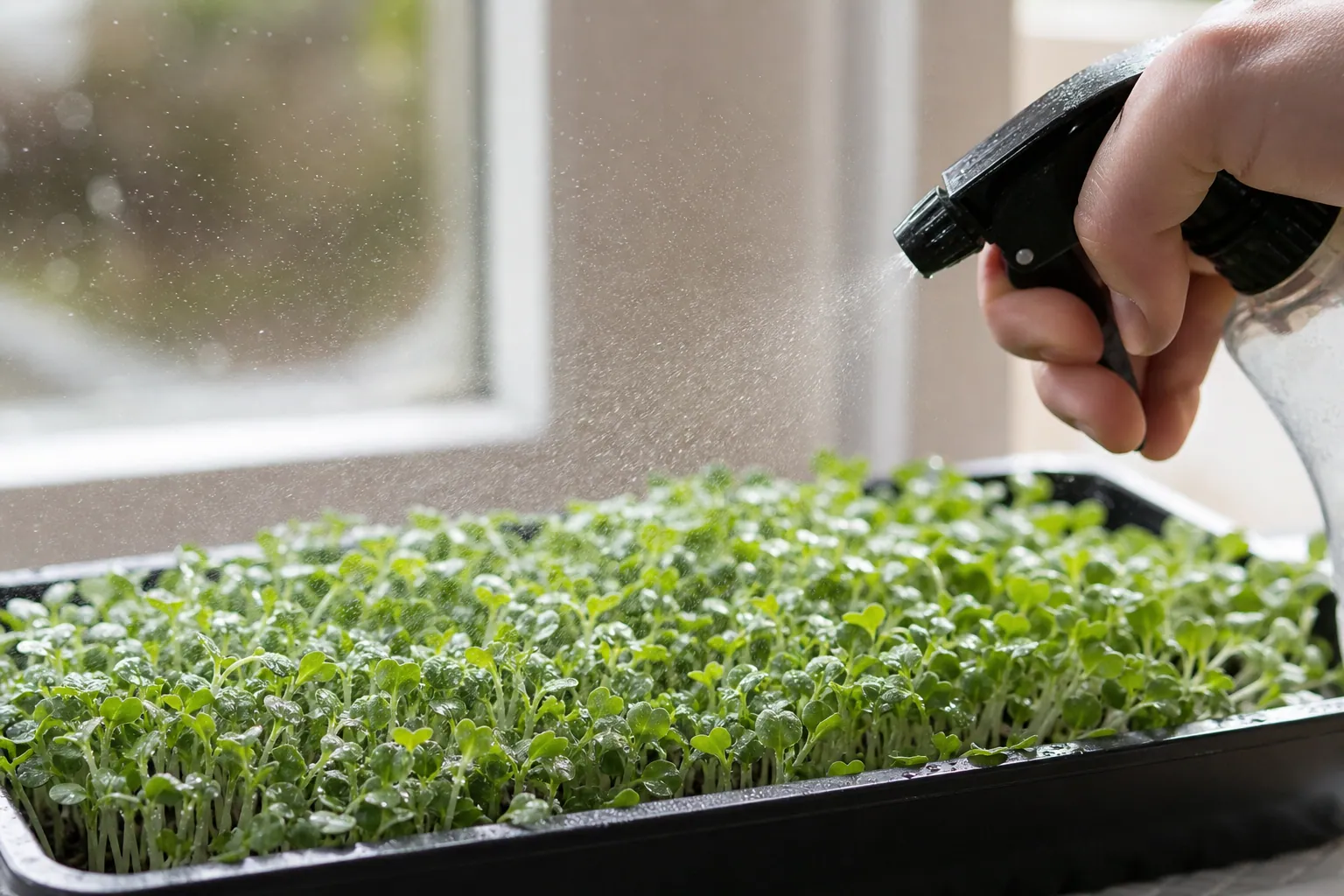
That said, growing by hand comes with real, predictable challenges. The three big ones are worth knowing before you start:
- Mold. Excess moisture, poor airflow, overcrowding, and warmth combine to invite mold, and it is by far the most common reason trays fail. New growers often mistake fuzzy mold for healthy root hairs until it is too late.
- Mess. Soil, spilled seed, and daily rinsing can quietly turn a kitchen counter into an ongoing project.
- Maintenance. A roughly 10-day cycle needs attention nearly every day. One busy week or a short trip can wipe out a whole tray.
Manual growing has a genuine failure rate, and it is usually a consistency problem rather than a skill problem. The plants are easy; staying on top of them every single day is the hard part.
The Buy-vs-Grow Tradeoff
If growing sounds like a chore, buying seems easier, but the store route has its own downsides. Packaged microgreens are expensive, often $4 to $6 per 2 oz clamshell, which works out to roughly $30 to $50 per pound, on par with premium cuts of meat. They are also frequently not fresh, having spent days moving through the farm-to-truck-to-warehouse-to-store supply chain. Because these greens are so delicate, they wilt quickly once cut, so shelf life is short and a lot of each package ends up in the trash. We cover this gap in detail in store-bought microgreens: expensive and not fresh.
This is the exact gap Luya was built to close. The Luya countertop “food computer” automates the whole cycle inside a sealed, climate-controlled, ventilated chamber: you drop in a pre-seeded tray, and AI-driven temperature control and automatic watering keep mold and daily chores out of the equation. You harvest only what you need, seconds before eating, while the rest keeps growing alive. Think of it like a Nespresso, but for fresh greens.
The Bottom Line
So, what are microgreens? They are young, nutrient-dense seedlings that pack concentrated vitamins, antioxidants, and flavor into a tiny, fast-growing package, often several times more nutrient-dense than the mature vegetable. They are simple to add to almost any meal, genuinely good for you, and increasingly easy to grow at home. Whether you start a tray on your windowsill or let an appliance handle it, microgreens are one of the smallest changes you can make to how you eat that delivers an outsized return.
Curious how effortless fresh microgreens can be? See how it works to grow restaurant-quality greens on your counter with zero mess and no daily chores. Ready to plant your first tray? Start with our beginner-friendly guide to how to grow microgreens at home.
Grow fresh greens at home
Get new microgreens guides + Luya updates. No spam.